Sunday, December 12, 2010

The Glorious Instruction

The Glorious Flight; Across the Channel with Louis Blériot
Published by: Puffin Books
Written by: Alice and Martin Provensen

Ever heard of Louis Blériot?  Well, he's not part of the Virginia SOLs but that does not mean he isn't worth reading about.  Blériot was the first person to fly across the English Channel back on July 25, 1909 in his innovative flying machine, Bléroit XI.  This text would be an excellent addition to any lesson covering the history of flight or general scientific exploration.  I was drawn to the unique illustrations on both the front and back covers (and, of course, the Caldecott Medal that confirmed my admiration).  This book has a vintage feel that seems to evoke a time much earlier than when its 1983 publishing date.  In fact, the Provensens recently won the Society of Illustrators Lifetime Achievement Award.

Louis Blériot and his large family are portrayed as a loving, curious, and quirky crew in the Provensens' somber illustrations and whimsical, almost poetic, text.  This is not your average non-fiction book because "Fact is turned into magic" throughout the text (The New York Times Book Review).  Though Alice and Martin Provensen did not win any awards for their writing, their approach to Blériot's historic journey is wonderful for older readers.  I particularly enjoyed how the Provensens portrayed Blériot's inspiration, exploration, failures, and eventual success.  We see brilliant sketches of the Blériot I, II, IV, V, VI, VII, and some of their crash landings.  By the time Blériot builds and tests the Blériot XI, we have experienced his frustration and cross our fingers for his success.  He is portrayed as much more compassionate than the typical scientists that are often studied in school as his family and family pets are frequently referenced for their support and inspiration. You can watch a short clip of Louis Blériot piloting one of his airplanes at CriticalPast.com.


Sunday, December 5, 2010

Eli Whitney and the Historic Graphic Novel

Eli Whitney and the Cotton Gin
Published by: Capstone Press
Written by: Jessica Gunderson
Illustrated by: Gerry Acerno, Rodney Ramos, and Charles Bartnett, III

This four chapter graphic novel about Eli Whitney and his turbulent journey towards inventing the Cotton Gin.  This thirty-two page picture book includes wonderfully expressive illustrations of Eli Whitney and eighteenth century America and cleverly relates historic invention and discovery to the needs of the times.  Instead of vaguely stating that Eli Whitney sought to invent a cotton gin that would help cotton farmers separate cotton seeds from cotton fibers, he did, and it changed the way Americans processed cotton forever, this text draws readers in with  its vivid depiction of human emotion.  The first image in the text shows a very disgruntled plantation owner addressing what readers can assume are slaves working on his cotton farm.  Gunderson builds towards Eli's moment of genius by highlighting some of the main frustrations with farming cotton during this period: cotton was grown in the southern United States but milled in Europe, this made cotton expensive, mills were eventually built in the US, but cotton was still expensive because it took so long to separate the seeds from the fibers.  Eli Whitney, being a true intellectual and natural scientist is inspired by his friends Catherine Greene and Phineas Miller to create a new and improved cotton gin (who knew the "roller gin" pre-dated Whitney's cotton gin but it was only useful when separating black-seed cotton, not the more widespread green-seed cotton).

You can preview the first two chapters of Eli Whitney through Google books to see if you're interested in this story, but know that it is a limited preview.  Unfortunately, you cannot see the inspired extension on the final pages of the fourth chapter that discuss the lasting impact of the cotton gin. Though the bulk of the text does not focus on how cotton farming affected the slaves working in the fields, Gunderson recognizes Whitney's invention as both a stimulus to the Southern American economy and as an unfortunate catalyst to the American slave culture.  

The quick facts page, glossary, or related resources listed at the end of the text are useful but not completely effective.  The glossary has a short list of useful terms, but these terms are not highlighted throughout the text.  I would have preferred these vocabulary words to be addressed during the introduction of the text or in context.  The related resources listed at the end of the text, however, are extremely useful.  There are four more age-appropriate texts on the cotton gin listed as well as a full bibliography.  There are also instructions for students to visit FactHound.com, enter the book's ID, and browse prescreened, age-appropriate sites (http://www.facthound.com/CategorySearch.aspx?ISBN=0736868437).  This option is available for all Capstone texts, which can also be searched by state standard at http://www.capstonepub.com/aspx/stdIndex.aspx. 

Big Students!

Big Sharks!
published by Scholastic
written by  Torri Kosara


Ever wonder how sharks are different than regular fish? How many teeth they have? Or what senses sharks use the most?  Well, this book is a great introduction to the particularities of the shark physique.  It is full of detailed photographs and graphic text and would be great for any individual with a special interest in sharks.  Conversely, the large photographs could easily scare a student who is uncomfortable with unfamiliar animals, especially those who are known predators (imagine a 12x12 photo of a shark with its jaws wide open, seemingly swimming in your direction...). The text is arranged in "pop-up video" style with bold text boxes floating on top of large photographs and shark-shaped graphics containing leading questions such as, "Why do you think sharks need to be able to move quickly?"  In order to read this book independently, students need to be familiar with words like "skeletons," "flexibility," and "rough."  Basic knowledge of the physical make up of fish would also be useful but not necessary.


This text would be very useful to a teacher planning a unit on sharks or ocean life for both graphic inspiration and factual content. Kosara cleverly delivers specific topics and facts in one to two sentences per page, cutting out unnecessary "fluff" and potentially overwhelming information.  She draws attention to the main text with thick borders and bright colors while the supporting text (like the extension questions) blends into the background a little more.  She bolds important vocabulary within the text and provides cut-aways when zooming in on a picture would benefit student understanding and observation.  Teachers could easily project select pages from this text using a document camera or by scanning them into a computer to help illustrate certain points to a class.  While the text is relatively simple in its layout, the content might be a little advanced for most lower elementary level science standards;however, it would be a great inquiry prompt while studying living systems or earth patterns in third or fourth grade.  The questions provided on each page could be useful for organizing small group inquiry activities in which students conduct their own research and present it to the class.  It might also be interesting to hear our BrainPop friends, Moby and Tim, talk about their experience with sharks if the subject is of particular interest to the class, http://www.brainpop.com/science/earthsystem/sharkattacks/preview.wemlhttp://www.brainpop.com/science/earthsystem/sharkattacks/preview.weml.


Although this book does not have a table of contents, there  there is a one page glossary with simple definitions of the bolded words at the end of the text. As mentioned earlier, this text is very subject-specific and might not be that useful for instruction at every level; but, it would definitely be considered a strong addition to any classroom library.

Tuesday, November 23, 2010

Just Teacher

Just Ella
Originally published by Aladdin Paperbacks
Written by Margaret Peterson Haddix

The last time I had a teacher incorporate a read aloud into my school schedule (before Dr. Johnson, of course), was Mrs. Shields in fifth grade.  We read a number of books throughout the year, but the one that has stuck with me is Ella Enchanted, by Gail Carson Levine.  I was obsessed with Ella’s go-getter approach to life and her constant perseverance in breaking her curse (for those of you who are not familiar with that story, Ella was given the “gift” of constant obedience by her fairy godmother at birth and is trying to break the spell as a young adult).  Ella Enchanted is a variation of the classic Cinderella story and the events that led to young Ella at the ball in a beautiful gown with glass slippers; Just Ella is about her supposed happily ever after.

I first bought Just Ella after my wonderful classroom read aloud experience because I thought it was the sequel to or a spin off of Ella Enchanted, but I was very, very wrong.  Despite what the people of the kingdom say about Cynthiana Elenora, the mysterious and beautiful princess to be, she’s just Ella Brown, a girl who escaped her wicked stepmother to make it to Prince Charming’s ball.  She lost her glass slipper while running home at midnight and got swept to the castle by the Prince and his entourage the very next morning.  Once in the castle, a slew of teachers and counselors are assigned to make her into the princess she never intended to be.  She tolerates her etiquette lessons and tight corsets all in the name of love, until she questions whether or not she is in love with Prince Charming.  


Ella’s story is filled with inspiration for young girls.  At times, its feminist undertones may be a little to extreme for some young readers (and even adults).  When Ella stands up to Madame Bisset, her primary instructor/advisor, because she and her ladies in waiting are forced into, “a change of pace to do needle point in a cloth prison instead of a stone one,” she is drugged and dragged into temporary confinement (102).  Ella later finds out that she was selected to be the future queen not because Charm fell hopelessly in love with her, but because she was the most beautiful girl at the ball and “the Charmings must always produce beautiful children.”  Things get even more complicated when Ella decides that she does not want to marry Charm, but that would be giving away too much!

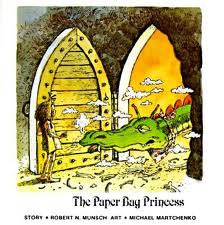
I think that this fantasy story would be a great addition to upper-level elementary discussion on stereotypes and human rights.  Most children are familiar with the classic fairytales, but they probably have never thought about why there’s often a wicked stepmother, a dead father, a hopeful girl, and a brave prince.  Disney addressed some of these stereotypes in their movie Enchanted, but there are plenty of books that delve into more realistic experiences.  Scholastic (who now publishes the book and it’s companion tale, Palace of Mirrors) has a useful discussion guide available on their website to help inspire student conversations http://www2.scholastic.com/browse/collateral.jsp?id=10860_type=Book_typeId=4672.  When talking about alternative fairy tales, I have to mention a favorite book from my childhood: The Paper Bag Princess by Robert Munsch.  This book would be a great read aloud for younger students, but it would be a great tale to revisit after discussing literary stereotypes and gender roles.  You can hear the story read aloud by the author for free on his website to see if you like it, but seeing the pictures is definitely worth it http://robertmunsch.com/the-paper-bag-princess/#. 

Tuesday, November 9, 2010

Behind the Classroom Wall

Behind The Bedroom Wall
Published by: Milkweed Editions
Written by: Laura E. Williams
Illustrations by: A. Nancy Goldstein


This book sparked my interest in the Holocaust as both a historical time period and a personally significant event.  I first read this book when I was in third grade and it has remained one of the most meaningful literary encounters of my life.  I do not remember where I got the book from or why I selected it; I just remember feeling changed after I read it.  Behind the Bedroom Wall is a young adult novel that delves head first into a time period and a state of mind that many modern-day adolescents cannot even begin to comprehend.  I cannot describe the power of this book any better than a passage from its back cover:

Filled with adventure, Behind the Bedroom Wall helps us to
understand the madness that drove so many to turn on their neighbors
and the courage that allowed some to resist.

This book was the spark of my fascination with the Holocaust, Jewish religion, and my own family’s heritage.  Although I was raised in a nuclear family that did not identify with any particular religion, my mother’s side of the family is of Jewish decent and my father’s side of the family is traditionally Catholic.  I grew up with limited exposure to the major holidays and traditions of both cultures; however, I have always had a special interest in Jewish culture.   My grandmother is a Holocaust survivor who secretly left Germany as an eleven-year-old Jewish girl on one of the last Kindertransport trains to Great Britain.  Her older sister was already in England attending school when their father and grandfather were taken away by the Gestapo in the middle of the night; less than a week later, my great grandmother dressed my Nana in her favorite dress and said goodbye to her forever.

As a young child, I could not even begin to wrap my head around the emotional trauma that my grandmother must have dealt with at such an early age, but reading this book helped me understand how disorienting this period really was.  Some critics on Amazon.com feel that this novel oversimplifies history and makes for a flat read, but the overwhelming majority (40/44 posted reviews) praise Behind the Bedroom Wall’s stirring plot line.   Korinna Rehme is a thirteen-year-old member of her local Jungmädel Nazi youth group who believes that “Hitler is the most wonderful man.”  While this statement is unsettling to most readers, it helps to illustrate the extremist mentality that took Germany by storm in the late 1930s.  While there are a number of young adult novels that describe the horror and despair of concentration camps and ghettos from a Jewish protagonist’s perspective, this novel makes readers think about the other side’s story and how sometimes, there is no clear line between right and wrong.

This book would be a wonderful addition to an upper-level elementary classroom full of curious readers learning about ethics and duty.  Students have numerous opportunities to make predictions about what will happen later in the text, starting with Korinna’s complaints about the mice she hears behind her bedroom wall.  If I were giving this novel to a class or a small group, I would be sure to remove the book jacket (if it’s a hard copy) because I feel that the synopsis on the back gives away too much. Milkweed Edition’s website even has a guided reading guide available at http://www.milkweed.org/downloads/cg_BBW.pdf that breaks the novel down into eight suggested lessons, an overview of the text, and helps set the historical context for the unit.  There are interdisciplinary connections (creating skits, looking at artifacts), word lists, and writing exercises available FOR FREE.  Milkweed Editions also has similar teacher’s guides available for a number of other texts (and did I mention you could download them and save them forever as PDF files?!)  Laura E. Williams’ website (http://www.lauraewilliams.com) is not the best resource, but it does have some interesting bits of information.  First of all, it lists her direct email, and second, is a link to http://www.btbwthemusical.com/, the site of the recently developed musical adapted from this novel.  Though it hasn’t quite made it to Broadway, this just shows the type of scope and sequence this powerful novel can have.


Monday, October 25, 2010

Blog of a Wimpy Reader


Diary of a Wimpy Kid
Published by Amulet Books
A novel in cartoons by Jeff Kinney

You know something big is happening in the literary world when you start typing “Diary of…” into your Google search bar and the first two suggestions that pop up are “Diary of a Wimpy Kid” and “Diary of Anne Frank,” in that order.  Isn’t that interesting, especially since Diary of a Wimpy Kid, “is a JOURNAL, not a diary” according to the novel’s protagonist, Greg Heffley.  Greg, a loveable but sometimes annoying sixth grader, shares his journey through middle school (and soon, high school!) with countless readers around the world.  Luckily for us, Greg is an avid writer who captures the emotions of every almost-middle-schooler in his witty prose and to the point illustrations.  While browsing the Internet for some fun facts about this series, I discovered that Jeff Kinney started out as a cartoonist and worked on the idea of Wimpy Kid for over six years before, wait for it, he began publishing what would eventually become a book in daily, blog-like installments!!!  Just think!  All of these blog posts we are writing could one day, maybe, lead to one of the most successful young adult series in recent times!


book #2


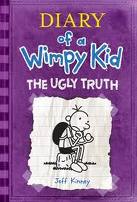
Too bad we’re not writing fiction in any of our classes….just kidding!   According to http://www.wimpykid.com/, “the online version of Diary of a Wimpy Kid has had more than 80 million visits, and is typically read by more than 70,000 kids a day.”  That’s something to talk about!  That also might explain why my “Diary of…” search prompted me with “a Wimpy Kid.”  This graphic novel is a trailblazer in the realm of blogging and online literature.  Kinney started publishing the online version of Wimpy Kid on http://www.funbrain.com/ and, after the success of Diary of a Wimpy Kid, he was asked to create another remarkable website, http://www.poptropica.com/.  While both of these websites are wonderful for children (and adults…I just spent a half hour exploring them), funbrain.com is an awesome tool for the classroom (poptropica.com is more of a continuous online video game where kids can create avatars and explore places, some educational, some not, all fun).   Funbrain.com has flash arcades for reading, math, and other subject matter.  You can play math baseball, create your own Mad Libs, Jr., Grammar Gorillas, or just read a Web Book (like Wimpy Kid).  

book #3
“Diary of a Wimpy Kid movie” was fourth on my original Google search suggestions, so that also speaks volumes.  This series, like many now a days, has been made into a major motion film; I bring this up now, on my children’s literature blog, because in a rare twist of fate, this movie inspired by a book inspired another book: Diary of a Wimpy Kid Movie Diary.  This movie book is actually very interesting, and tracks Greg Heffley and Zachary Gordon, the young actor that plays Greg, through the entire creative process.  Jeff Kinney shows his readers behind the scene of the original Diary, its sequels and, eventually, its big screen adaptation came to be.  Kinney also has a Diary of a Wimpy Kid Do-It-Yourself Book that helps inspire young comics and authors to take Greg Heffley on his next adventure.  

book #4
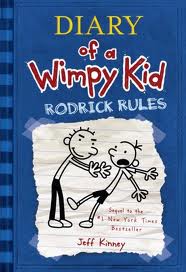
While I would love to incorporate these books into my classroom if I had a third, fourth, or fifth grade class, many teachers and parents do not feel the same unconditional love towards Greg Heffley’s journal.  This book talks about real things, from the viewpoint of a very realistic character and sometimes, real life is less than ideal.  Greg does face bullies, social ostracisms, and worst of all, the Cheese Touch, over the course of the first novel.  Some critics believe that these topics are not appropriate for classroom instruction, others believe that by introducing such controversial topics and exposing kids/tweens to journaling, these books are the best tools a classroom can have.  It should be pretty obvious by now which side I am on, but that doesn’t mean that I do not see any flaws in Greg Heffley’s lifestyle: although Greg is bullied, he is sometimes a bully himself; Greg is picked on by his older brother, Rodrick, but Greg picks on his younger brother, Manny.  Good or bad, this series is definitely worth the read and book five comes out in thirteen days so hurry up and get started!
Coming Soon!


Tuesday, October 12, 2010

Awful Teacher's Awful Poetry

Awful Ogre’s Awful Day
published by HarperCollins
written by Jack Prelutsky
illustrations by Paul O. Zelinsky

It is not every day you see a giant ogre running through a field, ripping the cover of a book to pieces, but would it surprise you to hear that Jack Prelutsky was behind it?  I didn’t think so.  Even the title of this book has a poetic ring to it, drawing even the most fearful readers in a little bit closer.  This book does not scream, “POETRY!!!” instead, it breaks through barriers (literally—take a closer look at the cover art) and fully consumes even the most wary poets with an unusual kind of whimsy.  Worried about poetry being too frilly or old fashioned?  Then this is the book for you.  There are eighteen poems spread out over forty pages of captivating snapshots of a day in the life of the one and only, Awful Ogre.

While Prelutsky first introduces Awful Ogre to his audience in the poem, “Awful Ogre Rises,” readers start learning all about his destructive frolics through the mountains on the front cover and the townspeople’s feeble attempts to repair the damage on the title page. I was a little surprised, however, to learn that Prelutsky’s sometimes friend, Lane Smith, was not behind Awful Ogre’s dark and whimsical illustrations.  That being said, I had to look into Paul O. Zelinsky’s illustrated past to see for myself what other crazy images he created for the world of children’s literature.  Interestingly enough, it seems that Zelinsky has a number of styles and has illustrated everything from Beverly Cleary chapter books (Strider) to a popular mechanical book version of The Wheels on the Bus.  His style is constantly evolving in order to best suit the text it is bringing to life, and Awful Ogre is no exception.  I would be very interested in finding out how Prelutsky and Zelinsky came to be partners.

While this book has not yet been honored with any awards for its poetry, Awful Ogre’s Awful Day was voted New York Times Best Illustrated Book in 2001.  While that in it self is a great honor, I do not feel like that award alone does this poetry collection justice.  This book actually makes you laugh out loud.  Then, after you catch your breath, you take a better look at the pictures and you lose your breath laughing again.  The only person that I have seen keep a straight face while reading these poems is Paul O. Zelinsky himself reading “Awful Ogre’s Hot Dog Lunch” (http://www.youtube.com/watch?v=ToXyZd5s1vw).   This particular poem was not my favorite, but you can see a piece of my favorite poem, “Awful Ogre Dances,” on the HarperCollins website: http://www.harpercollinschildrens.com/books/Awful-Ogres-Day/?isbn13=9780060774592&tctid=100 (click the “Brose Inside” button).  I don’t want to give away too much, but see the first four and a half poems illustrations for yourself!
 
P.S. There is a sequel to this poetry collection!  Awful Ogre Running Wild is another whimsical collaboration between Prelutsky and Zelinsky about the same Awful Ogre.  It does not have quite as strong a voice or a visual presence as Awful Ogre’s Awful Day but it is another great way to get even the wariest of readers interested in poetry.